
Disclosure: we may earn a commission from qualifying purchases through some links on this page, at no extra cost to you. We only recommend products that fit the job.
The best thank you cards for donors are the ones your volunteers will actually write and mail this week. For most small nonprofits that means a bulk box of plain cards with envelopes; groups with a recognizable logo or a big event can justify custom printed cards. Below are the picks by reader type, what each costs, and three messages you can copy.
Quick answer
What are the best thank-you cards for donors?
Best overall: a 50 to 100 pack of simple "Thank You" cards with envelopes (roughly $15 to $40). Best for branding: custom printed cards with your logo. Best for schools: blank cards students decorate. Best for speed and postage: 4 x 6 thank-you postcards. Whatever you buy, a handwritten line matters more than the card.
Best thank you cards for donors: picks by reader type
- Tight budget, lots of donors: bulk boxed thank-you cards with envelopes.
- Established group with a logo: custom printed thank-you cards with your logo.
- PTOs, schools, kids' programs: blank cards for kids to decorate.
- Fast follow-up after an event: 4 x 6 thank-you postcards.
- Personal notes from the pastor or board chair: blank kraft note cards.
Donor thank you cards compared
| Card type | Typical pack | Approx. price* | Best for |
|---|---|---|---|
| Bulk boxed cards | 50 to 100 with envelopes | $15 to $40 per pack | Any group, high volume |
| Custom printed with logo | 25 to 500, made to order | $1.50 to $3.50 per card | Branding, major donors |
| Blank cards for kids' art | 24 to 100 | $10 to $25 per pack | Schools, PTOs, youth groups |
| Thank-you postcards | 40 to 100 | $10 to $25 per pack | Quick notes, lower postage |
| Blank kraft note cards | 25 to 100 with envelopes | $10 to $25 per pack | Longer personal notes |
How we chose these card types
This list is research-based, not hands-on tested. We looked at what ranks for donor thank-you cards (mostly custom-card printers and handwriting services), compared common pack sizes and price ranges at major US retailers in November 2026, and kept only card types that are widely sold and easy for a volunteer to order. We left out specific brands because listings change often; the search links show current options and reviews. We also left out robot-handwriting card services: they can work for large mailings, but most quote nonprofit prices on request, which makes them hard to compare for a volunteer budget.
We also weighed postage. Under the USPS mailing standards, a card qualifies for the lower postcard price only if it is rectangular, between 3.5 x 5 and 4.25 x 6 inches. Square envelopes count as nonmachinable letters and pay a surcharge, so we did not pick square cards.

1. Bulk boxed thank-you cards (best overall)
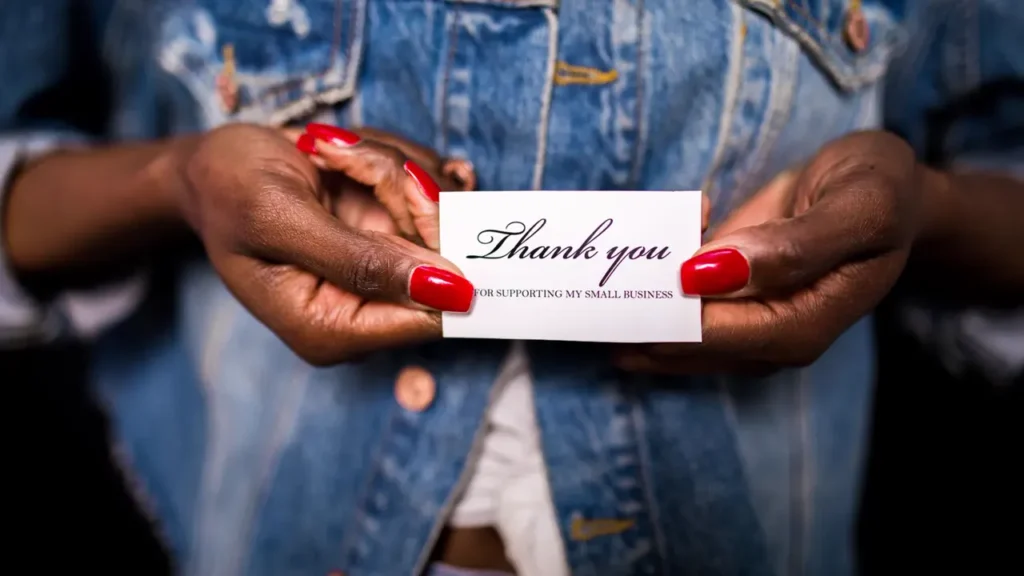
A box of 50 to 100 folded cards with envelopes covers a whole year of thank-yous for many small groups, at roughly 15 to 40 cents a card. Pick a plain design that reads "Thank You" on the front and is blank inside, so it works for cash gifts, volunteers and in-kind donors alike.
Downsides: generic, and the cheapest packs can feel thin. Not for: groups that want every touchpoint to carry their logo.
2. Custom printed cards with your logo (best for branding)
Made-to-order cards can show your logo, a program photo or a short printed message inside, leaving space for a signature. Per-card prices usually fall as quantity rises, so order once a year in a quantity you will use.
Downsides: the highest cost per card, a proofing step and a wait for printing. Not for: brand-new groups, or anyone who needs cards for an event next week.
3. Blank cards for kids' artwork (best for schools)
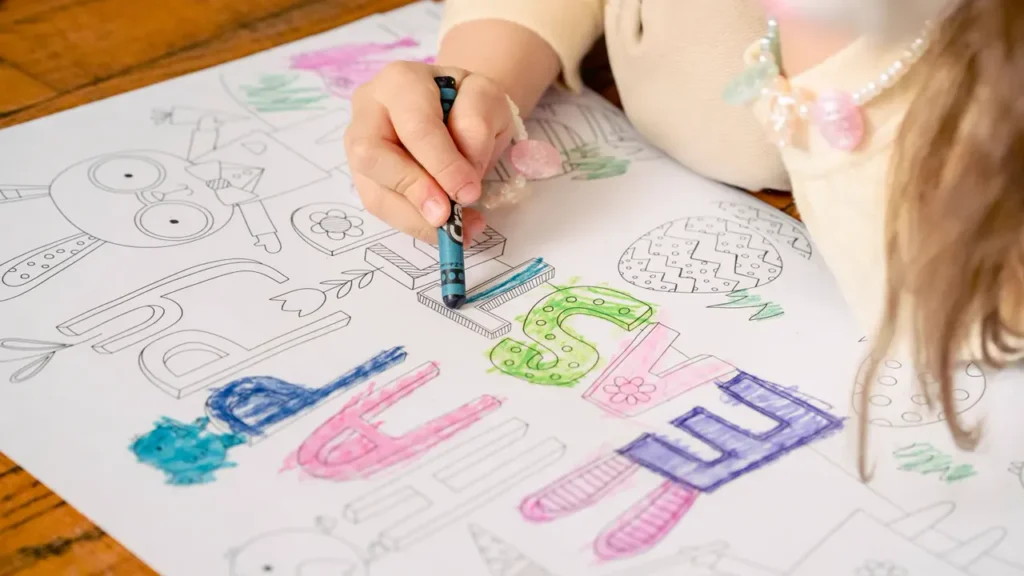
A card drawn by a student is hard for a parent or local business to throw away. Buy blank white cards with envelopes (or fill-in-the-blank cards for younger children), hand them out during class or club time, and add one adult-written line inside. Our PTO thank-you letter for donations has wording for the formal follow-up.
Downsides: takes class time and an adult to collect and check them. Not for: confidential donors or anyone who expects a tax document.
4. Thank-you postcards (best for speed and postage)
A 4 x 6 postcard has no envelope to stuff or seal, and it mails at the postcard price. That makes it the fastest way to thank 80 raffle-ticket buyers or event guests within a few days.
Downsides: anyone can read the message, and there is less room to write. Not for: major gifts, condolence gifts or any message that mentions an amount.
5. Blank kraft note cards (best for personal notes)
Plain kraft or ivory note cards suit a pastor, board chair or executive director who writes a few longer notes each week. They look personal rather than promotional.
Downsides: no "Thank You" printed on the front, so the message carries everything. Not for: high-volume mailings where speed matters.
What to write in a donor thank you card
Keep it to three or four sentences: the donor's name, the specific gift, what it made possible, and your signature. Don't include tax wording; send that separately using our donation receipt template.
Template: First-time donor
Dear [Name],
Thank you for your first gift to [Organization]. Your [amount or "support"] is helping [specific result, e.g. stock our pantry shelves for the holidays]. We're so glad you're with us.
Warmly, [Your name]
Template: Event or raffle supporter
Hi [Name],
Thank you for coming to [Event] and supporting [cause]. Together we raised $[total] for [purpose]. It was great to see you there.
[Your name], [Role]
Template: Long-time or monthly donor
Dear [Name],
Your steady giving over [time period] has made [specific program] possible week after week. Thank you for sticking with us. [One line of news.]
Gratefully, [Your name]
For in-kind gifts, describe the item instead of a value, as in our thank-you letter for an in-kind donation. For larger gifts, a card works best alongside a phone call; our donor thank-you call script keeps it to two minutes.
Next step: when a card is not enough, use our guide to writing a donor thank-you letter for longer, more formal thanks.
Frequently asked questions
Should nonprofits send handwritten thank-you cards or emails?
Both have a place. An email or receipt confirms the gift quickly, while a handwritten card shows a real person noticed. Many small groups email every donor within a day and mail a card to first-time givers, larger donors and volunteers. A card without a personal line adds little.
How many thank-you cards should a small nonprofit buy?
Count last year's donors, add your volunteers and in-kind donors, and add about a fifth for spoiled cards and new supporters. A 100-pack covers many small churches and PTOs for a year. Buy custom printed cards only in quantities you can use before your logo or address changes.
Can a thank-you card replace a donation receipt?
Usually not. A tax acknowledgment needs your organization's name, the amount or item description and a statement on whether anything was given in return. You could write those lines in a card, but a separate receipt is clearer and easier to keep. Use the card for gratitude only.
Do square thank-you cards cost more to mail?
Yes. USPS treats square letter-size envelopes as nonmachinable, which adds a surcharge to the regular stamp price. Rectangular cards avoid it, and postcards between 3.5 x 5 and 4.25 x 6 inches qualify for the cheaper postcard rate. Check current prices at usps.com before a big mailing.